Tips for trips
Cheb
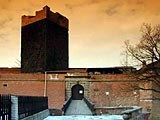
The centre of Cheb, a town with history reaching back to the middle-ages, is preserved as a historical monument. The Cheb castle – an exclusive example of Falc in our country with a unique twin chapel, built at the end of 12th century by rebuilding an older stone castle at the place of a former Slavic settlement. The Roman emperor Friedrich I. Barbarossa started building it in 1179. Under the reign of Friedricha II at the beginning of the 13th century the unique twin chapel was built. Nowadays three preserved roman buildings are visitable: The Black Tower built of puff-stone, the twin castle chapel of St Erhard and Urshula and the remains of the palace with unique five-part roman windows. In the rooms inside the fortification you can see an archeological exhibition on the early history of the town. The exhibition of stove building shows impressive work of Willi Russ from 1941 to 1944. The Cheb castle is openfrom April to October.
Špalíček
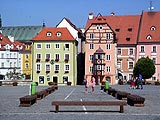
Špalíček is the symbol of the Cheb's square. Made of a bizarre complex of 11 houses, it is divided by Kramarska street. It was developing since the 13th Century at the place where there were originally shopkeeping booths and butchers´ shops. According to the oldest depiction from 1472, the ground plan of these 2 blocks has remained basically the same up to this day. The third row of houses, originally placed on the western side of the square, was taken down.
Karlovy Vary
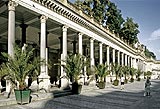
The world famous spa town is situated in a valley of the river Teplá. Its main riches is especially the hot springs, Vřídlo with its temperature of 73°C being the most famous one. The town was established in the 14th century and was named after Karel IV., Czech king and Roman emperor, who, as the legend puts it, came with the idea of establishing it. Every year, the most important international film festival of central and eastern Europe takes place there.
Mariánské Lázně
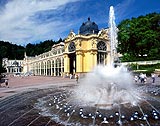
Mariánské Lázně jsou druhými největšími českými lázněmi, s velkým bohatstvím minerálních pramenů. Přímo v areálu jich vyvěrá 40 a v nejbližším okolí téměř 100. Území současných lázní patřilo premonstrátskému klášteru v Teplé, jehož opat K.K. Reitenberg prosadil z popudu klášterního lékaře J.J.Nehra počátkem 19.století výstavbu prvních lázní. Na základě velkolepého projektu architekta V.Skalníka byly provedeny terénní úpravy a založeny parky, které jsou dnes vedle množství pramenů nejcharakterističtějším znakem města. V roce 1866 byly Mariánské Lázně povýšeny na město a počátkem 20.století již patřily mezi nejvýznamnější evropská střediska.
Hlavní láze
Františkovy Lázně
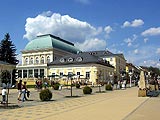
Františkovy Lázně is the smallest spa town of the famous west-bohemian spa triangle. As well as Karlovy Vary and Mariánské Lázně it is very rich in natural mineral springs. The spa was established in 1793 and until now it has been keeping its spa atmosphere with historical architecture and picturesque parks. Since the summer of 2005 a new Aquaforum, a roofed aquapark with outdoor pools, has been opened.
Loket nad Ohří
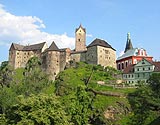
Loket castle is the most distinctive landmark of the town of Loket, history of which reaches back into the middle ages. The town got its name after its position in the meander of river Ohře, which served as its natural fortification in the middle ages. The town with its castle, the river and the surrounding forests give one of the most picturesque views in the Czech republic. Loket castle was established in the 12th century and its history is full of stories about attempts to scale it. Later, the castle was also used as a prison. Undergoing a thorough recent reconstruction, it is now open for its visitors. Inside the castle there is also a museum.
Kynžvart Castle
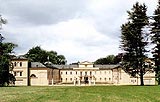
The castle is standing on a place of a former fort from 16th century. Since 1623 the Kynžvart manor was owned by the Metternich family. The baroque castle was built by earl Philipp Emmerich between 1681and 1691. Between 1820 and 1833 the castle was remodelled in the Viennese Classical Style. The Mettrnich family owned the castle until 1945. Since then, the castle has been a state-owned property. Inside the castle you can see a large number of very interesting historical exhibits. Besides four altarpieces in the late-gothic style there is a library, which belongs among the most important aristocratic libraries in the Czech republic. Bulk of the exhibits is linked with Klement Wenzel Nepomuk Lothar the second prince von Metternich - Winneburg. The visitors can see the inside of the castle on a guided tour, including Metternich´s office, the library, billiard hall, castle saloons, mummies etc. The castle is a unique example of a country representative residence built in the French Imperial and Viennese Classical Styles (architect Pietro Nobile).
Pilgrimage church Mario Loreta - Starý Hroznatov
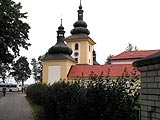
The westernmost loreta in Bohemia is found in Starý Hrozňatov nearby the town of Cheb. Built by the jezuits from Cheb in 1664-1689, it was wasted after the German inhabitants were forced to leave in 1945. The renewal of the loreta in Starý Hrozňatov, which took place after the political changes in 1989, was organised by the society Loreto-Verein from Waldsassen, which was also the main kind sponsor. The head of the society and the main organiser of the renewal was Ing. Anton Hart, a native from the neighbouring village of Nový Hrozňatov. Nowadays it is again the meetpoint of Catholics from the Czech republic and Germany and a popular tourist attraction for visitors from all Europe.
Klášter Teplá
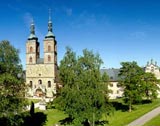
The monastery of premonstrat order was established in 1193. During the period of its greatest fame it had a large property and greatly influenced the course of events in the region. It played the key role in establishing the spa town of Mariánské Lázně. The preserved original parts of the monastery are a valuable example of romanesque-gothic architecture. On the turn of 17th and 18th centuries the monastery underwent important baroque changes. Its pride is a beautiful library, the second largest of its kind in the Czech republic. It houses over 100 000 books, out of which there are more than 1000 manuscripts.
Ore mountains
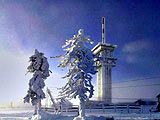
The Ore mountains constitute the continuos 130 km long mountain zone, which is a natural border between the Czech republic and Germany. On the German side the mountains dips slowly to a lowlands. On the Czech side the mountains falls more intensive. The total difference of heights is about 700 m. The Ore mountais are set up of several parts, for example Klínovec mountainous country or Cínovec flat country. The mountain range was created in the Primary. The volcanic activity in the past made the Ore mountains rich in ores and curative springs, which led to establishing spa areas. The Ore mountains gives brilant conditions for lovers of winter and summer sports. The most famous centers of recreation are Klínovec, Boží Dar, Jáchymov, Kovářská, Kraslice, Pernink, Abertamy, Cínovec, Telnice and many others.
Bublava
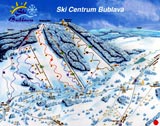
The town of Bublava is situated on the border, in the middle of the westernmost foreland of the Ore mountains, in the altitude of 750 to 935 metres above the sea level. It has been a popular and often visited skiing centre since the beginning of the previous century, especially for its location, enough snow, beautiful landscape and also the improvements in skiing and tourist services. The skiing centre SKI-BUBLAVA was thoroughly reconstructed in the past three years and is now one of the leading ski centres of the Czech republic. Besides a wide variety of ski, gourmet and other services, the main goal is to offer the guests a nice background for their sport activities and leisure time.
Seeberg Castle (Ostroh)
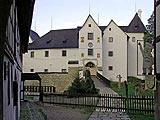
Seeberg castle was built at the end of the 12th century and served as a military fortress. The first preserved written record about it comes from 1322 and informs that Ludwig of Bavaria mortgaged the castle and the entire Cheb region to Jan of Luxembourg in return for a pledge of assistance in his aspiration for the imperial throne. The pledge remained unfulfilled and the castle fell under the property of the Czech Crown. Another document from 1349 written by Karel IV. confirms the belonging of Seeberg to Czech crown. In 1434 Kašpar Šlik, a rich townsman from Cheb, became its owner. Kašpar Juncker became its owner in 1461 after buying it from the Šlik family. There was a number of other owners later and the castle was then for long years under the custody of the town of Cheb. The castle is open for visitors since the middle of March to middle of November. The collections currently exhibited represent the interior and furniture of 19th century and ethnography.
Natural Reserve SOOS
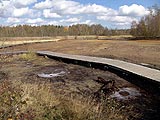
Situated 6 km northeast of Františkovy Lázně, the reserve was established in 1964, taking the area of total 221 ha. Only a part of it is visitable. You will find there a 1,2 km long educational trail on a strake. The reserve itself is a large moorland and peat-bogs, with a large number of mineral sprnigs and the so called „mofetas“, mud volcanos releasing clean carbon dioxide. The trail leads on the bottom of a dry lake which used to have salty mineral water. Nowadays we can find there a European rarity, the so-called „kieselguhr shield“, kieselguhr piled from the shells of lake weed growing on its bottom. It is a „moon landscape“ ridged by erosion and covered with a yellow and white layer of mineral salt. Many preserved animals live in the reserve and many wetland and saltland plants grow there. The area of the reserve offers the 1,2km educational trail, geopark, museum with exhibition "Nature in Chebsko" and "Nature of SOOS" and a new pavilion with exhibition "History of Earth". Paleontological exhibition shows large photomurals of Zdeněk Burian paintings and life-size models of pre-historic lizards.
Butterfly farm Žirovice
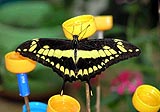
The ground floor houses a large collection of exotic butterflies as well as butterflies from our countries. In the greenhouse on the first floor with tropical climate the visitors walk among butterflies flying freely.
Outdoor museum Doubrava
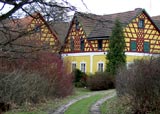
Doubrava outdoor museum is made of a group of buildings representing the typical rural folk architecture of framed buildings from the 18th century. Part of the outdoor museum is also an exhibition of agricultural tools, furniture from between 18th and 20th centuries and a stylish restaurant. In the village there is a horse breeding farm with the biggest batch of arabian full-bloods in the Czech republic.
Komorní Hůrka
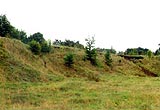
Komorní Hůrka is our youngest volcano, active 850.000 years ago. Some experts claim that it was active even only 350 00 years ago. In spite of its fame the volcano is not a distinctive one. It is a partly forested small hill between Cheb and Františkovy Lázně. The obvious cratered formation we can find there is, however, not the original crater itself but an old quarry. The famous poet J.W. Goethe was interested in Komorní Hůrka, which is almost a holy place for the history of geology. Goethe´s fans worsip this place as well and you can find the poet´s memorial plaque picturing the relievo of his head placed in the rock.
Vildštejn castle in Skalná
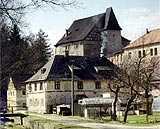
Vildštejn castle is situated on a granite rock above the inflow of Vonšovický creek. Standing on the rock in a picturesque valley of the small town of Skalná, Vildštejn castle was built in the 12th century by the Nothaft family. Inside the ground floor you can see the very interesting cross vault. The oldest part of the castle is preserved, too. It is a roman style chapel with a staircase carved in the stone. Since 2000 Vildštejn has been a private property and is undergoing a thorough reconstruction. Stylish restaurnt, knight banquets, historical programme.
Natural Reserve Kladská
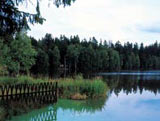
National natural reserve peat-bogs Kladské rašeliny has been state-protected since 1933 and consists of three large forest peat-bogs: Tajga, Paterák and Lysina. You can walk through the reserve taking the educational nature trail around the pond Tajga, learning about rare flora and fauna.
Chlum svaté Maří Monastery
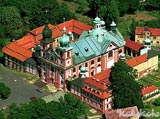
Pilgrimage place known since 14th century. A complex of a former monastery with church of st. Maří Magdalena built after the plans of K. Dienzenhofer and other architects is one of the most important baroque monuments in the Czech republic.
Castle and chateau in Bečov nad Teplou
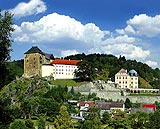
Bečov, with history reaching back to the 13th century, is situated in the valley of the river Teplá. Its main landmark is a complex of originally gothic castle and baroque chateau. A real jewel you can see there is the unique roman shrine of St. Moor from the 13th century, one of the most valuable jeweller memorabilia in the Czech republic. The shrine has a very exciting history: after being considered lost for a long time it was found under the castle chapel floor in 1985. It was renovated in the 90´s.
Golf Mariánské Lázně
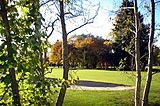
The oldest golf resort in the Czech republic was opened on 21st August 1905 by the English king Edwardem VII. The resort is long-term rented by the golf club, which has reconstructed the clubroom, keeping the original romantic-style parts. Because of its altitude the season here starts later than on other Czech golf resorts. However, it is perfectly maintained.
Jesenice Dam
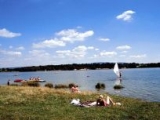
One of the cleanest dams in the Czech republic, Jesenice nearby Cheb invites you to come camping, swimming and fishing. It is an ideal place for swimmers, surfers, divers and yachtsmen. Kids have fun here, too, riding on the water slide or in their children corner. The dam is also a stop on the routes of palmipeds.
|